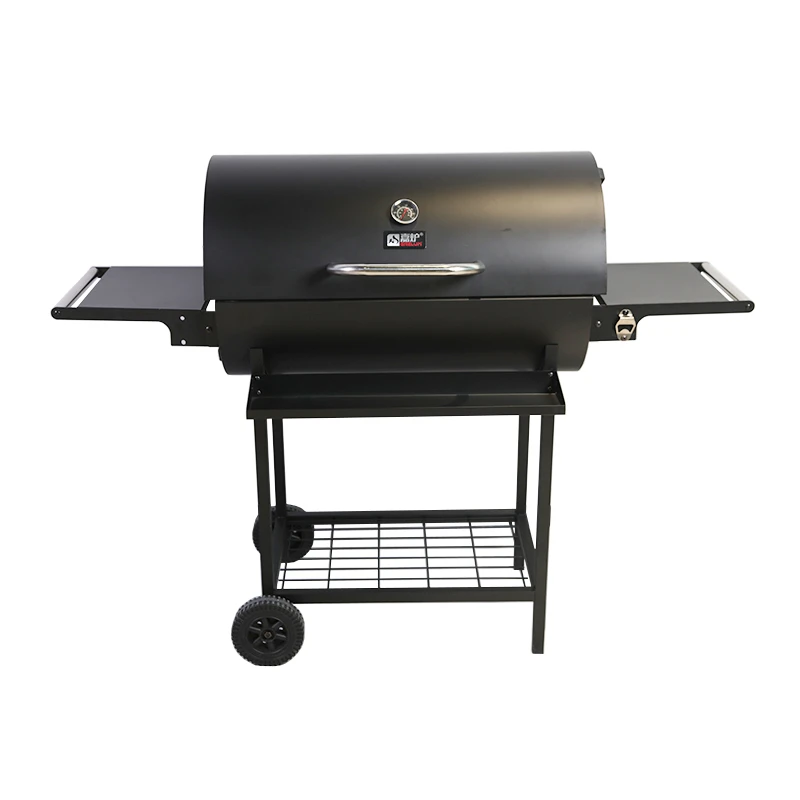
Introduction: Understanding Charcoal Grills and Smokers
Charcoal grills and charcoal smokers are two common types of outdoor barbecue equipment. Both use charcoal as a fuel source, but their cooking methods, structural designs, temperature requirements and airflow systems are different.
A traditional charcoal grill is primarily designed for cooking food over direct heat. It typically operates at higher temperatures and is suitable for grilling steaks, burgers, sausages, vegetables and other foods that require relatively short cooking times.
A charcoal smoker, on the other hand, is designed for low-temperature cooking over an extended period. It uses controlled heat and smoke circulation to cook food gradually, making it suitable for brisket, pork shoulder, ribs and other barbecue dishes.
Although these products have different primary functions, modern outdoor cooking equipment can combine grilling and smoking capabilities in one unit.
Understanding these differences is important for consumers, outdoor cooking brands, barbecue equipment distributors and business-to-business buyers when selecting products for different markets.
For manufacturers such as Blue Carp, these differences also determine the cooking chamber configuration, firebox design, ventilation structure, material selection and customization requirements.
How Does a Charcoal Grill Work?
A charcoal grill cooks food by transferring heat from burning charcoal to the cooking surface and the food placed above it.
In a conventional direct-grilling configuration, charcoal is positioned beneath the cooking grate. As the charcoal burns, it produces heat that cooks food directly. The cooking temperature depends on several factors, including the amount of charcoal, oxygen supply, distance between the fuel and food, and grill design.
Most charcoal grills include several basic components:
Cooking Chamber: Provides the main cooking space.
Charcoal Grate: Supports charcoal and allows air to circulate underneath.
Cooking Grate: Holds food above the heat source.
Adjustable Air Vents: Regulate oxygen entering the combustion area.
Lid: Encloses the cooking area and helps retain heat.
Ash Collection Area: Collects ash produced during combustion.
Direct and Indirect Grilling
Charcoal grills can support two main cooking methods.
Direct Heat Cooking
Food is positioned directly above the burning charcoal. This arrangement produces relatively high cooking temperatures and is suitable for searing steaks, grilling burgers and cooking vegetables.
Indirect Heat Cooking
Charcoal is positioned to one side of the cooking chamber, while food is placed away from the direct heat source. The enclosed space allows hot air to circulate around the food.
Indirect grilling reduces direct exposure to the flame and is suitable for larger cuts of meat that require longer cooking times.
One advantage of charcoal grilling is its versatility. By adjusting charcoal placement, fuel quantity and ventilation openings, users can change the cooking conditions without changing the fuel type.
How Does a Charcoal Smoker Work?
A charcoal smoker is designed to maintain controlled heat and circulate smoke around food over an extended cooking period.
Unlike a basic direct-heat charcoal grill, many smoker designs separate the fire source from the main cooking area. This configuration is commonly found in offset charcoal smokers.
The charcoal burns inside a separate firebox. Heat and smoke then move through a connecting passage into the cooking chamber before exiting through an exhaust chimney.
This arrangement allows food to cook without being placed directly above the charcoal.
Low-and-Slow Cooking
Low-and-slow cooking refers to preparing food at relatively low temperatures over several hours.
The purpose is to allow heat to penetrate thicker cuts of meat gradually. This cooking method is commonly used for brisket, pork shoulder and barbecue ribs.
Compared with direct grilling, smoking requires more consistent temperature management.
The operator needs to monitor:
Charcoal quantity and combustion rate.
Air entering through the intake vents.
Smoke movement through the cooking chamber.
Exhaust flow through the chimney.
Internal cooking temperature over time.
Some vertical charcoal smokers also use a water pan. Water absorbs heat as it warms, providing thermal buffering that can reduce temperature fluctuations.
However, water pans are not necessary in every smoker design. Their use depends on the equipment structure and cooking requirements.
The effectiveness of a charcoal smoker therefore depends not only on its fuel source but also on chamber construction, airflow management and heat retention.
Charcoal Grill vs. Charcoal Smoker: 5 Key Differences
Although both products use charcoal, their structural and functional differences influence cooking performance.
Cooking Method
A charcoal grill is primarily designed for direct-heat cooking. Food is generally positioned above or near the charcoal, allowing heat to transfer quickly to the cooking surface.
A charcoal smoker focuses on indirect cooking. Heat and smoke circulate through an enclosed chamber, allowing food to cook gradually.
Some combination units support both cooking methods through adjustable charcoal placement and separate cooking zones.
Temperature Range
Traditional charcoal grilling generally uses higher temperatures for searing and faster cooking.
Charcoal smoking typically uses lower and more controlled temperatures for extended cooking periods.
The exact operating temperature depends on the food, smoker configuration, fuel arrangement and airflow conditions.
For manufacturers, this difference influences the design of ventilation openings, cooking chamber dimensions and heat management components.
Fuel Placement and Firebox Structure
In a conventional charcoal grill, the charcoal is commonly placed underneath the cooking grate.
In an offset charcoal smoker, the charcoal is contained in a separate firebox connected to the cooking chamber.
The separate firebox allows heat and smoke to enter the cooking area without placing the food directly above the fuel.
This structural difference is one of the most important considerations when developing a charcoal smoker.
Airflow and Smoke Circulation
Airflow affects how charcoal burns and how heat moves through the equipment.
A charcoal grill generally uses intake vents to regulate oxygen supply and control combustion intensity.
A charcoal smoker requires coordinated airflow between the firebox, cooking chamber and exhaust outlet.
The intake controls the amount of oxygen entering the combustion area, while the exhaust chimney provides an outlet for hot air and smoke.
The positioning and dimensions of these components influence the overall airflow pattern.
Cooking Time and Applications
Charcoal grilling is suitable for foods that can be prepared relatively quickly, such as steaks, burgers, chicken pieces and vegetables.
Charcoal smoking is more suitable for large or thick cuts of meat that require extended cooking.
For outdoor equipment brands and retailers, these differences create opportunities to offer several product categories rather than relying on one grill configuration.
Temperature Control and Airflow: What Makes the Difference?
Temperature management is one of the most important technical considerations when comparing charcoal grills and smokers.
In a charcoal grill, temperature can be adjusted by changing the charcoal quantity, controlling oxygen supply and modifying the distance between the food and heat source.
However, maintaining a stable low temperature in a conventional grill can require frequent monitoring and fuel adjustments.
A dedicated charcoal smoker is generally designed to make this process easier through its chamber structure and airflow configuration.
Key Factors Affecting Temperature Stability
Air Intake Design
Air intake vents regulate the amount of oxygen entering the firebox or charcoal chamber. More oxygen can increase combustion intensity, while restricting airflow can reduce the burning rate.
Chamber Construction
The dimensions, material thickness, lid fit and overall construction influence how heat is retained inside the equipment.
A well-fitted cooking chamber can help reduce uncontrolled heat loss and improve temperature management.
Exhaust Chimney Design
The exhaust chimney provides a pathway for hot air and smoke to leave the cooking chamber.
Its position and dimensions should be coordinated with the intake system to support appropriate airflow.
Charcoal Arrangement
The placement and quantity of charcoal influence heat distribution and combustion duration.
Different configurations may be required for direct grilling, indirect cooking and extended smoking.
For charcoal grill manufacturers, these factors need to be considered together rather than treated as independent components.
Which Cooking Equipment Is Suitable for Different Applications?
The right product depends on cooking preferences, operating environments and the intended market.
| Application | Recommended Equipment | Main Consideration |
|---|---|---|
| Backyard BBQ | Charcoal Grill | Direct grilling and convenient operation |
| Family Outdoor Cooking | Charcoal Grill | Multiple food types and flexible cooking |
| BBQ Restaurants | Charcoal Grill or Smoker | Cooking volume and operating requirements |
| Slow-Cooked Barbecue | Charcoal Smoker | Stable low-temperature cooking |
| Outdoor BBQ Events | Combination Grill Smoker | Multiple cooking methods |
| Outdoor Equipment Retail | Different Grill Configurations | Product range and customer preferences |
For outdoor living brands and barbecue equipment distributors, offering different sizes and configurations can help address a wider range of customer requirements.
A compact charcoal grill may suit residential outdoor cooking, while a larger offset smoker may appeal to consumers who regularly prepare smoked meats.
Combination grill smokers also provide an option for customers who want both direct grilling and smoking functions in one product.
Key Manufacturing Considerations for Charcoal Grills and Smokers
The manufacturing process directly affects the structural quality, assembly requirements and functional performance of charcoal grilling equipment.
When developing a new product, manufacturers need to consider several technical areas.
Material Selection
Carbon steel is commonly used for cooking chambers, fireboxes and supporting structures. Its thickness should be selected according to the product dimensions, construction requirements and intended application.
Stainless steel can be used for cooking grates and selected components where corrosion resistance and surface maintenance are important.
Material selection should also consider the operating temperature and exposure conditions of each component.
Welding and Structural Fabrication
The cooking chamber, firebox, support frame and connecting sections require appropriate fabrication and assembly processes.
Welding positions and structural dimensions should be confirmed during product development to ensure that the components fit together according to the approved design.
Surface Treatment
Outdoor charcoal grills are exposed to heat, moisture and changing weather conditions.
Exterior surface treatments should therefore be selected according to the temperature exposure and intended use of each metal component.
Heat-resistant coatings may be used on suitable exterior surfaces, while cooking surfaces require materials and finishes appropriate for direct food contact.
Assembly and Component Compatibility
Components such as cooking grates, air vents, handles, wheels, shelves and exhaust chimneys must fit the overall product structure.
Before bulk production, manufacturers should confirm component dimensions, installation positions and packaging arrangements.
These considerations are especially important for OEM and private-label orders, where product specifications need to remain consistent across production batches.
Blue Carp: Custom Charcoal Grill and Smoker Manufacturing
Different markets have different requirements for charcoal grill dimensions, cooking capacity, product appearance and functional configurations.
As a charcoal grill manufacturer, Blue Carp focuses on developing product configurations based on customer drawings, reference samples and technical specifications.
Our customization scope can cover the following areas:
Customized Grill Structures
Blue Carp can work with customers to develop different charcoal grill structures according to their product concepts and target applications.
Possible configurations include:
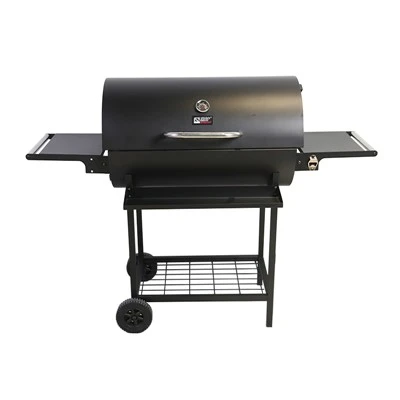
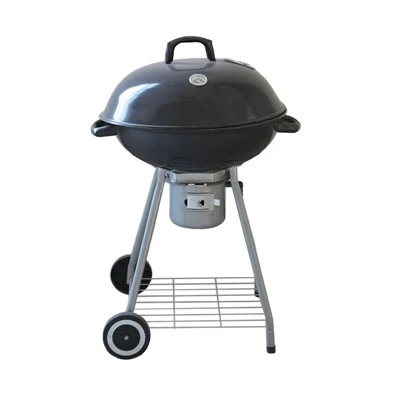
Barrel charcoal grills.
Kettle charcoal grills.
Offset charcoal smokers.
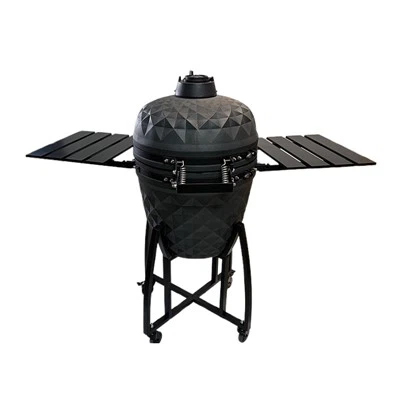
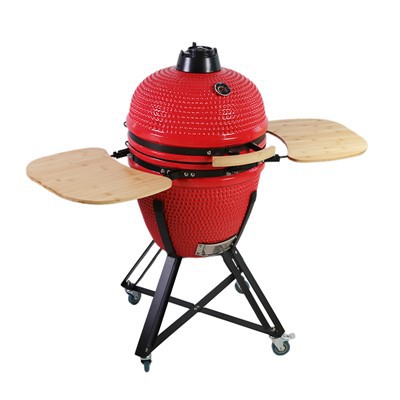
Combination charcoal grill smokers.
Customized cooking chamber structures.
The final configuration depends on the selected product design and manufacturing requirements.
Material and Dimension Customization
Material specifications and product dimensions can be adjusted according to the intended market and product positioning.
Customization can include:
Carbon steel and stainless steel components.
Main body dimensions and metal thickness.
Cooking chamber capacity and grate dimensions.
Firebox structure and position.
Surface finishes and exterior colors.
Functional Component Customization
Different product designs require different functional components.
Blue Carp can coordinate the configuration of adjustable air vents, exhaust chimneys, cooking grates, handles, wheels, side shelves and other accessories according to the approved specifications.
These components can be selected to match the product's cooking functions and intended retail positioning.
OEM and ODM Services
For brands, importers and barbecue equipment distributors, product differentiation is important when developing private-label grill collections.
Blue Carp supports OEM and ODM customization based on customer requirements, including:
Product structure and dimensions.
Logo placement and brand identification.
Material and color specifications.
Accessory configurations.
Product labels and instruction manuals.
Customized retail packaging.
From initial product specifications to sample confirmation and bulk order coordination, the manufacturing requirements can be reviewed before mass production.
This approach helps customers establish clear product specifications and align the final product with their market requirements.
Conclusion
The main difference between a charcoal grill and a charcoal smoker lies in their cooking methods, temperature requirements and structural configurations.
A charcoal grill is primarily designed for direct-heat cooking and relatively fast food preparation. A charcoal smoker focuses on indirect heat, smoke circulation and extended low-temperature cooking.
For outdoor cooking brands and barbecue equipment distributors, understanding these differences helps determine which product structures and functions are appropriate for their target markets.
From cooking chamber dimensions and firebox configurations to material selection, surface finishes and private-label packaging, product design plays an important role in the manufacturing process.
Blue Carp provides customized charcoal grill and smoker manufacturing solutions based on customer drawings, samples and product specifications, supporting the development of outdoor barbecue equipment for different market requirements.
Looking for a Charcoal Grill or Smoker Manufacturer?
Contact Blue Carp to discuss your product design, material specifications, functional requirements and OEM/ODM customization project.
FAQ
Can a charcoal grill be used as a smoker?
Yes. A charcoal grill can be used for smoking by arranging charcoal for indirect heat, controlling airflow and adding suitable smoking wood. However, maintaining low temperatures for extended periods may require more frequent monitoring.
Is a charcoal smoker better than a charcoal grill?
Neither product is universally better. A charcoal grill is more suitable for direct grilling and faster cooking, while a charcoal smoker is designed for extended low-temperature cooking with controlled smoke circulation.
What is an offset charcoal smoker?
An offset charcoal smoker has a separate firebox connected to the main cooking chamber. Heat and smoke travel from the firebox into the cooking chamber, allowing food to cook indirectly.