Understanding BBQ Smokers and Their Cooking Principles
A BBQ smoker is an outdoor cooking appliance designed to prepare meat, poultry, seafood, vegetables, and other ingredients through controlled exposure to heat and smoke. Unlike conventional grilling, which often uses direct high heat to cook food quickly, smoking typically relies on indirect heat and longer cooking periods to develop texture, tenderness, and smoky flavor.
The main components of a BBQ smoker include the cooking chamber, heat source, smoke-producing system, airflow openings, cooking grates, and temperature-monitoring devices. Their arrangement varies according to the smoker's fuel type, capacity, and intended application.
During operation, the heat source raises the temperature inside the cooking chamber, while smoke from wood or other suitable smoking materials moves around the food. Airflow determines how oxygen reaches the combustion area and how heated air and smoke leave the chamber.
For outdoor cooking brands and equipment distributors, understanding these components is essential when evaluating a BBQ smoker manufacturer. Product design influences not only cooking performance but also assembly requirements, maintenance procedures, transportation, and long-term usability.
How Fuel Systems Affect Smoker Performance
Fuel selection determines how heat is generated, how smoke is introduced, and how much manual adjustment is required during cooking. Four common configurations serve different customer preferences.
Charcoal BBQ Smokers
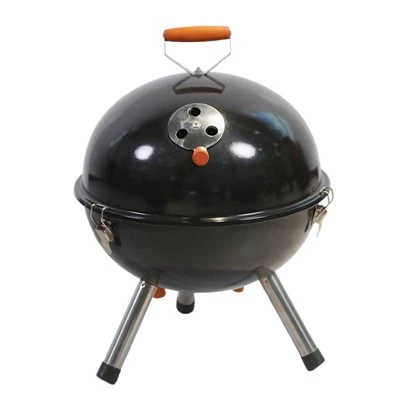
Charcoal smokers use charcoal as the primary heat source. Wood chunks or chips may be added to introduce additional smoke aromas. Users regulate combustion by adjusting air intake and exhaust openings.
This configuration appeals to buyers who prefer traditional charcoal cooking and direct control over the fire. Product development should consider ash removal, fuel loading access, vent adjustment, and the accessibility of internal components.
Wood Pellet Smokers
Pellet smokers burn compressed wood pellets. In automated models, a hopper stores the fuel, while an auger transfers pellets into the combustion area. Electronic controls and temperature sensors can regulate pellet feeding according to the selected cooking temperature.
For manufacturers, the hopper layout, feeding mechanism, electrical components, and access for cleaning are important design considerations. The control system should be evaluated alongside the physical construction because automated operation depends on both mechanical and electronic components.
Electric BBQ Smokers
Electric smokers use heating elements to generate heat, with wood chips or other compatible materials supplying smoke. Temperature controls simplify heat adjustment and can reduce the need for continuous manual fire management.
These models are suitable for buyers prioritizing straightforward operation. Design considerations include electrical component protection, heating element access, cable routing, and compliance with the requirements of the intended sales market.
Gas BBQ Smokers
Gas smokers use a burner to provide heat, while a separate wood container may generate smoke. Burner adjustment allows users to change heat output without managing a charcoal fire.
The design must account for burner placement, combustion air, ventilation, gas connections, and access for inspection. Applicable fuel-system safety requirements should be confirmed for the destination market and product configuration.
Comparing Different BBQ Smoker Structures
Smoker geometry affects cooking space, heat movement, footprint, and access to food and fuel.
Offset Smokers
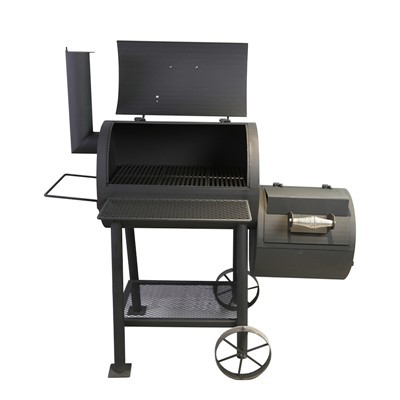
An offset smoker generally features a horizontal cooking chamber connected to a separate firebox. Heat and smoke travel from the firebox into the main chamber before exiting through a chimney or exhaust opening.
This arrangement allows users to add fuel without opening the main cooking chamber. Manufacturers should evaluate firebox positioning, chamber dimensions, internal airflow, door sealing, and the accessibility of ash and grease removal points.
Vertical Smokers
Vertical smokers arrange cooking racks at different heights within a cabinet or cylindrical enclosure. This design increases the number of available cooking levels without requiring a proportionally larger ground footprint.
The number and spacing of racks determine which food sizes can be accommodated. Removable racks and accessible interior surfaces can also simplify cleaning and improve everyday usability.
Drum Smokers
Drum smokers use a vertically oriented cylindrical body, commonly with a lower combustion area and upper cooking grate. Air enters through lower vents and exits through upper openings.
Their relatively compact structure makes them suitable for outdoor cooking applications where floor space matters. Important design factors include the stability of the base, lid fit, vent adjustment, and convenient access to the cooking area.
The appropriate configuration depends on the intended buyer, expected cooking volume, available space, and target price range. No single structure is suitable for every application.
Material Selection and Heat Retention
Material selection affects structural strength, weight, corrosion resistance, heat storage, surface appearance, and manufacturing cost.
Carbon steel is commonly used for smoker bodies and structural components because it can be formed, cut, and welded into different configurations. Its performance in outdoor environments depends on material thickness, surface treatment, coating quality, and maintenance.
Stainless steel can be used for selected exterior or interior components where corrosion resistance and cleaning requirements justify the additional material cost. The specific grade should be confirmed rather than relying on a general stainless steel description.
Porcelain-coated components and powder-coated steel provide alternative surface finishes, depending on the component's operating temperature and exposure conditions. Coatings should be suitable for their intended application and applied according to the relevant process requirements.
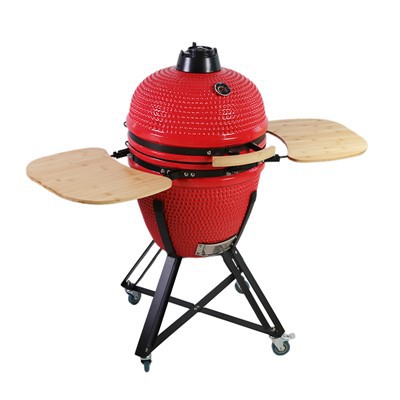
Ceramic construction is another option in certain smoker designs. Ceramic bodies can retain heat effectively, although weight, impact resistance, manufacturing complexity, and handling requirements must also be considered.
Heat retention depends on more than material selection. Wall thickness, chamber geometry, door fit, insulation where applicable, and leakage around openings all contribute to temperature stability.
For OEM and ODM projects, buyers should confirm the material specifications of individual components, the intended surface finish, and the required corrosion-resistance performance before approving a production sample.
Airflow Design and Temperature Management
Airflow is a fundamental part of smoker engineering. The combustion system requires an appropriate oxygen supply, while the cooking chamber needs a controlled path for heated air and smoke.
Air intake dampers regulate incoming air, influencing combustion intensity. Exhaust openings allow smoke and hot air to leave the chamber. Their position, dimensions, and adjustment range affect how air travels through the equipment.
Poorly sealed doors or uncontrolled openings can create uneven temperatures and increase fuel consumption. However, sealing every opening is not the objective: a smoker needs a deliberately designed airflow path to support combustion and smoke movement.
Temperature monitoring also differs between product configurations. Basic models may use a built-in thermometer, while advanced electric or pellet models can incorporate digital controllers and food-temperature probes.
A chamber thermometer measures conditions at its sensor location, which may differ from the temperature near the food. Product testing should therefore consider sensor placement, temperature variation across cooking racks, and the equipment's response to changes in ambient conditions.
For customized products, control features should match the intended market and price point. Digital displays, remote monitoring, or automated fuel feeding should be included when they provide practical value and can be supported by the product's engineering and manufacturing requirements.
Cooking Capacity and Functional Configuration
Cooking capacity is a key purchasing consideration for residential users, retailers, restaurants, and outdoor cooking brands.
A compact smoker may suit small households or limited outdoor spaces, while a larger chamber can accommodate multiple cuts of meat or several racks of food. Vertical configurations can increase usable rack space, whereas horizontal chambers may better accommodate longer food items.
Buyers should evaluate the usable cooking area rather than relying only on the external dimensions of the product. Rack spacing, door opening dimensions, removable components, and access for loading food all affect practical capacity.
Additional design features may include side shelves, wheels, handles, grease collection systems, ash trays, tool hooks, and storage areas. Each feature should be assessed for its impact on stability, assembly, packaging size, and production cost.
For private-label programs, brands can compare several configurations before finalizing the product range. Shared components across different sizes may help simplify sourcing and spare-parts management, provided that the common design meets the requirements of each model.
Accessories, Cleaning, and Product Maintenance
Accessories influence how conveniently a smoker can be operated and maintained.
Wood chips and chunks introduce smoke from suitable hardwoods. Different wood species produce different aroma profiles, allowing users to adjust the flavor of smoked foods. Fuel compatibility and loading instructions should follow the specific equipment design.
Water pans are used in some smoker configurations to absorb heat and add moisture to the cooking environment. They can help moderate temperature changes, although their necessity depends on the cooking method and appliance structure.
Temperature probes support monitoring of food temperature, while remote thermometers allow users to check readings without repeatedly opening the cooking chamber. Accessories must be compatible with the equipment's operating conditions.
Maintenance access is equally important. Removable cooking grates, accessible grease trays, practical ash collection, and surfaces that can be cleaned without dismantling major assemblies can improve the user experience.
Outdoor products should also include clear instructions for cleaning, storage, coating care, and protection from prolonged exposure to moisture. Electrical and gas components require maintenance procedures appropriate to their design.
Key Considerations When Sourcing BBQ Smokers
Selecting a BBQ smoker supplier requires evaluating the product specification alongside manufacturing and commercial requirements.
First, define the target market and end use. Residential buyers, outdoor cooking retailers, and food-service operators may require different chamber sizes, construction details, and maintenance arrangements.
Second, establish the technical specification. This should cover dimensions, materials, fuel type, cooking area, temperature-control features, accessories, finish, and packaging requirements. Any performance claims should be supported by applicable product testing.
Third, assess customization requirements. OEM projects may involve branding, color, packaging, and selected component changes. ODM projects may require more extensive work on product configuration, structure, or functional features.
Fourth, confirm production and delivery arrangements. Buyers should discuss minimum order quantities, sample approval, tooling requirements, production scheduling, inspection criteria, shipping dimensions, and spare-parts availability before placing a bulk order.
Finally, evaluate quality control. Relevant checks may include dimensional inspection, weld and assembly inspection, coating appearance, component fit, functional testing, and verification of the finished product against the approved sample.
A clear specification and approval process can reduce misunderstandings between the buyer and manufacturer and provide a more consistent basis for repeat orders.
Blue Carp: Manufacturing Support for BBQ Product Buyers
Blue Carp supports B2B buyers looking for BBQ equipment manufacturing and OEM/ODM cooperation. For outdoor cooking brands, importers, wholesalers, and distributors, product development involves more than selecting a finished item from a catalog. Dimensions, construction, finish, accessories, branding, and packaging may all need to align with the target market.
A structured customization process begins with the buyer's product brief. This defines the intended application, customer group, expected price range, preferred materials, appearance requirements, and estimated order volume.
The next step is to review the proposed specification and identify which requirements can be addressed through existing product configurations and which may require further engineering or tooling evaluation. Sample review helps both parties assess dimensions, component fit, surface finish, and the overall product configuration before bulk production.
For larger purchasing programs, manufacturing coordination also covers component sourcing, assembly requirements, inspection procedures, carton specifications, and shipping arrangements. Confirming these details early helps buyers evaluate the full sourcing cost rather than focusing only on the unit price.
Blue Carp's manufacturing background and OEM/ODM services provide a starting point for discussing customized BBQ product programs. Buyers interested in BBQ smokers or related outdoor cooking equipment should provide the required product type, technical specification, target quantity, and destination market so that product compatibility and customization scope can be reviewed.
Start Your OEM Project with Blue Carp to discuss your product requirements, branding needs, and bulk-order plans.
Frequently Asked Questions About BBQ Smokers
What is the difference between a BBQ smoker and a regular grill?
A BBQ smoker is primarily designed for controlled, extended cooking with smoke and indirect heat. A conventional grill often emphasizes direct heat and shorter cooking times. Some multifunctional outdoor cooking appliances combine both methods.
Which fuel type should buyers choose for a BBQ smoker?
Charcoal suits users who prefer manual fire management, while pellet systems can automate fuel feeding and temperature control. Electric models simplify heat adjustment, and gas models offer adjustable burner output. The choice depends on the target market, operating preferences, and product specification.
What materials should buyers consider when sourcing BBQ smokers?
Carbon steel, stainless steel, coated steel, and ceramic are used in different smoker designs. Buyers should compare the material grade, component thickness, finish, corrosion protection, and intended operating conditions rather than selecting by material name alone.
Can BBQ smokers be customized for private-label brands?
Customization may include dimensions, finishes, branding, packaging, accessories, and selected structural or functional changes. The available scope depends on the base design, tooling requirements, order quantity, and technical feasibility. Buyers should confirm these details with the manufacturer before approving production.
What information should be included in a BBQ smoker RFQ?
An effective RFQ should identify the product type, dimensions, fuel system, material requirements, cooking area, finish, accessories, logo and packaging requirements, target quantity, destination market, and required delivery schedule. Drawings or reference samples can help clarify the specification.
About Blue Carp
Blue Carp provides BBQ product manufacturing and OEM/ODM support for international buyers. Contact our team to discuss product specifications, customization requirements, and bulk-order planning for your outdoor cooking product range.