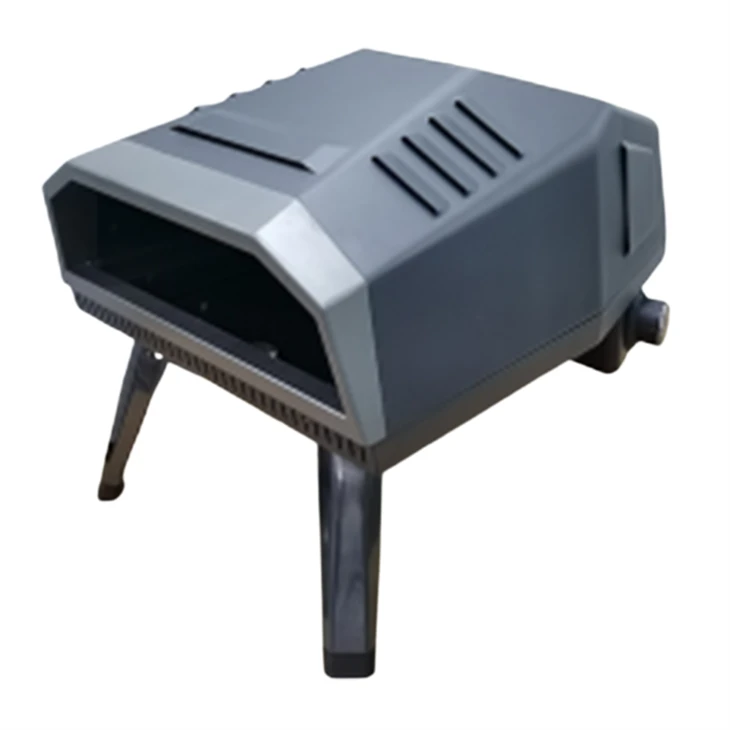
The Engineering Principles Behind Outdoor Pizza Ovens
An outdoor pizza oven is a cooking appliance designed to bake pizza and other foods using concentrated heat inside a compact chamber. Unlike conventional household ovens, many outdoor models are engineered to reach high cooking temperatures and transfer heat rapidly to the dough, toppings, and cooking surface.
Three heat-transfer mechanisms contribute to the baking process: conduction, radiation, and convection. Conduction transfers heat from the cooking floor to the pizza base. Radiation from the heated oven roof and internal surfaces cooks the upper portion of the pizza. Convection distributes heat through the air circulating inside the chamber.
These mechanisms must work together. A cooking floor that heats too slowly may extend baking time, while excessive bottom heat can burn the crust before the toppings are ready. Similarly, insufficient heat from above may leave cheese and other ingredients undercooked.
For outdoor cooking brands and distributors, understanding these factors helps when comparing product designs and preparing technical specifications. Oven geometry, fuel configuration, insulation, cooking floor material, and burner placement all influence the finished product's performance.
The design objective is not simply to achieve a high maximum temperature. It is to create a cooking environment that delivers appropriate heat distribution, practical temperature adjustment, and repeatable results under the intended operating conditions.
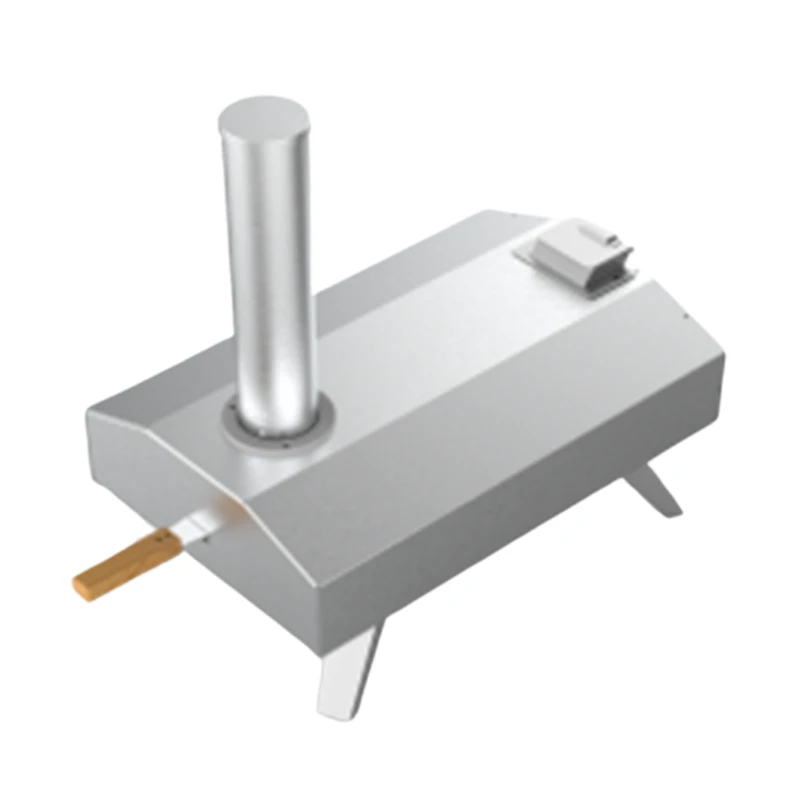

Heating Systems and Fuel Configuration
The heating system determines how an outdoor pizza oven generates heat, how users control cooking conditions, and what maintenance the appliance requires.
Wood-Fired Heating Systems
Wood-fired pizza ovens use burning wood as their heat source. Depending on the design, the fire may be positioned inside the cooking chamber or in a separate combustion area.
Direct exposure to a wood fire can produce strong radiant heat and introduce subtle smoky aromas. However, users must manage fuel loading, airflow, ash removal, and the position of the fire during cooking.
For manufacturers, important considerations include the firebox layout, combustion air supply, heat-resistant surfaces, and safe access for fuel loading. The chamber must also provide enough room for the operator to position and rotate the pizza.
Gas Heating Systems
Gas pizza ovens use propane or natural gas burners to generate heat. A control valve allows users to adjust burner output, while the burner arrangement determines how heat enters the cooking chamber.
Gas systems can simplify routine operation because users do not need to manage wood logs or remove the same type of solid-fuel residue. Nevertheless, burner placement and chamber geometry still require careful evaluation.
Product specifications should identify the intended gas type, connection requirements, ignition method, ventilation provisions, and applicable safety requirements. Models designed for different gas supplies may require different components and should not be assumed interchangeable.
Electric Heating Systems
Electric pizza ovens use heating elements to warm the cooking chamber and baking surface. Depending on the design, temperature sensors and electronic controllers may regulate the heating cycle.
Electrical models eliminate the need for a combustion system, but their performance depends on available power, heating-element placement, insulation, and control logic.
For OEM projects, buyers should confirm voltage, frequency, rated power, plug configuration, and destination-market electrical requirements before approving the product specification.
Multi-Fuel and Pellet Configurations
Some pizza ovens support more than one fuel source, allowing users to select different heating methods according to their preferences. Pellet-fired models use compressed wood pellets, with some designs incorporating a hopper and feeding mechanism.
Multi-fuel equipment requires particular attention to compatibility between the heating components, airflow paths, and control arrangements. Each supported operating mode should be clearly documented and tested.
Cooking Chamber Design and Heat Distribution
The cooking chamber is one of the most important structural elements of an outdoor pizza oven. Its internal dimensions, roof shape, floor position, and heat-source location determine how heat reaches the food.
A domed chamber can direct radiant heat toward the cooking area while allowing heated air to circulate. The precise result depends on the dome geometry, chamber height, burner or fire location, and exhaust arrangement.
The cooking floor also requires careful selection. Refractory materials and suitable ceramic surfaces can absorb heat and transfer it to the dough. Floor thickness and thermal properties affect preheating requirements and temperature recovery after a pizza is placed inside.
An oven designed for frequent successive baking needs to recover its cooking-floor temperature between batches. If the floor loses heat faster than the heating system can restore it, subsequent pizzas may bake differently from the first.
Door openings influence both heat retention and food handling. A wider opening makes it easier to insert and remove pizzas, but it can also increase heat loss when the oven is open. Door dimensions should therefore balance access, chamber efficiency, and the size of the intended food products.
For manufacturers, chamber design should be evaluated as a complete system rather than as a collection of independent parts. Floor materials, roof geometry, insulation, and heat-source placement must be compatible with one another.
Material Selection for Outdoor Pizza Ovens
Outdoor pizza ovens operate under repeated heating and cooling cycles and may be exposed to rain, humidity, sunlight, and other environmental conditions. Material selection affects structural stability, corrosion resistance, heat retention, weight, and production cost.
Stainless Steel
Stainless steel is used in many outdoor cooking appliances because selected grades provide corrosion resistance and can be formed into shells, panels, and structural components.
The performance of a stainless steel oven depends on its actual grade, thickness, fabrication quality, surface finish, and maintenance. Buyers should confirm the specified grade instead of treating all stainless steel as equivalent.
Coated Steel
Painted or powder-coated steel can provide a range of exterior colors and surface finishes. It may also offer a cost-effective option for products targeting specific retail price points.
The coating system must be appropriate for the operating temperature and exposure conditions of each component. Areas close to combustion sources require particular attention to thermal suitability.
Refractory Materials
Refractory cement, refractory tiles, and other heat-resistant materials are used in selected cooking chambers and baking floors. Their function is to tolerate high operating temperatures and, depending on the design, store heat for subsequent transfer to the food.
The composition, thickness, installation method, and thermal expansion characteristics influence performance. Poorly matched materials or inadequate installation can contribute to cracking during repeated heating and cooling cycles.
Insulation and Structural Assembly
Insulation reduces heat transfer from the cooking chamber to the exterior. Its effectiveness depends on the material, thickness, continuity, and placement within the oven structure.
Manufacturers must also consider the interfaces between metal shells, refractory components, doors, and supporting frames. These interfaces experience different thermal conditions and require suitable clearances and fastening arrangements.
For B2B buyers, a detailed material specification should identify each component, its material grade, surface treatment, and intended function. This provides a clearer basis for sampling, quality inspection, and repeat production.
Installation Formats and Product Positioning
Outdoor pizza ovens are available in several structural formats, each serving different installation and distribution requirements.
Countertop models are designed for placement on suitable work surfaces or dedicated stands. Their compact footprint can suit residential patios and outdoor kitchens where permanent construction is not required.
Freestanding models combine the oven with a dedicated frame or cart. Wheels, locking mechanisms, handles, and storage shelves may be incorporated according to the product configuration.
Built-in models are intended for installation within an outdoor kitchen or a purpose-designed enclosure. Buyers must verify clearances, ventilation, heat protection, and the installation instructions before selecting this format.
Portable models prioritize manageable weight, compact dimensions, and convenient storage. Their smaller chambers may reduce the number of pizzas that can be baked at one time, making them more appropriate for occasional cooking or smaller groups.
These formats create different opportunities for outdoor cooking brands. A distributor serving apartment residents may prioritize compact countertop products, while an outdoor kitchen specialist may require integrated designs with coordinated exterior finishes.
Product positioning should be established before finalizing dimensions, accessories, packaging, and customization requirements.
Cooking Capacity, Dimensions, and Functional Design
Cooking capacity affects both the end user's experience and the commercial requirements of a product program.
A small oven may accommodate one pizza at a time, whereas a larger chamber may support multiple pizzas or larger food items. Actual capacity depends on the internal floor dimensions, pizza diameter, clearance around each pizza, and the space needed to turn or reposition food.
External dimensions alone are not sufficient for evaluating capacity. Two ovens with similar exterior widths may provide different usable cooking areas because of variations in insulation thickness, chamber shape, and wall construction.
Functional components should also be considered. Handles, adjustable legs, removable cooking surfaces, side shelves, and integrated storage can improve usability but may increase product weight, assembly complexity, or packaging volume.
For OEM product development, the intended capacity should be defined early. Buyers can then evaluate whether the proposed chamber size and supporting structure meet their customers' needs without unnecessarily increasing material use or shipping costs.
Packaging is another important part of the specification. Product dimensions, fragile refractory components, accessories, and assembly requirements influence protective packaging design. A complete specification should therefore cover both the assembled appliance and its packed dimensions.
Quality Control and Product Testing
Quality control should verify that the finished product matches the approved drawings, materials, and performance requirements.
Dimensional inspection can confirm the fit of panels, doors, frames, and cooking components. Assembly inspection can identify problems with fasteners, welds, surface finishes, and alignment.
Functional testing should be appropriate to the heating system. For example, gas models require checks of the relevant gas connections and ignition functions, while electric models require verification of electrical components and controls under the applicable test procedures.
Temperature testing can assess preheating behavior, temperature variation across the cooking surface, and recovery after food is introduced. Test conditions should be recorded consistently so that results can be compared across samples or production batches.
Surface inspection is also important for outdoor products. Buyers should define acceptable standards for coating appearance, scratches, corrosion protection, and visible manufacturing defects.
The inspection plan should be agreed upon before mass production. A clear acceptance standard helps align the manufacturer, importer, and brand owner and reduces uncertainty during order approval.
OEM and ODM Customization for BBQ Product Buyers
OEM and ODM cooperation allows outdoor cooking brands to develop products that fit their market positioning, sales channels, and customer requirements.
Customization may involve exterior color, logo placement, packaging artwork, accessory combinations, product dimensions, and selected structural components. More extensive changes to the chamber, insulation, or heating system require technical feasibility reviews.
A practical development process begins with a product brief covering the intended customer group, fuel preference, installation format, target price range, estimated order quantity, and destination market.
The manufacturer can then review the requirements and identify which elements can be handled through an existing configuration and which may require new tooling, engineering work, or additional testing.
Sample approval is an important checkpoint. Buyers should review dimensions, surface finish, branding, assembly, and packaging before authorizing bulk production.
The final specification should document the approved materials, components, inspection criteria, packaging requirements, and permitted product variations. This information becomes the reference for production and subsequent repeat orders.
How Blue Carp Supports BBQ Product Sourcing
Blue Carp works with international B2B buyers on BBQ product manufacturing and OEM/ODM cooperation. For importers, wholesalers, distributors, and private-label brands, the sourcing process begins with defining the intended product and confirming the technical requirements.
For an outdoor pizza oven project, buyers should first identify the preferred heating system, installation format, cooking capacity, exterior finish, accessory requirements, and packaging specifications.
The next step is to review the customization scope and determine which requirements are compatible with the proposed product configuration. Buyers should also establish sample approval procedures, quality inspection standards, order quantities, and delivery expectations before committing to production.
Blue Carp's experience in BBQ product manufacturing provides a basis for discussing product sourcing, branding, and customization requirements. However, the availability of specific pizza oven models, materials, and technical modifications should be confirmed for each project rather than assumed from the broader BBQ product range.
For buyers developing a new outdoor cooking product line, a clear RFQ can accelerate technical review. Include reference images or drawings, expected annual demand, target market, preferred materials, logo requirements, and packaging details.
Start Your OEM Project with Blue Carp to discuss your BBQ product requirements, private-label plans, and bulk-order needs.
Frequently Asked Questions
What determines the baking performance of an outdoor pizza oven?
Baking performance depends on cooking-floor temperature, radiant heat from the chamber roof, airflow, insulation, and the location of the heat source. These factors should be assessed together rather than relying only on the oven's maximum temperature.
Which materials are used in outdoor pizza ovens?
Common materials include stainless steel, coated steel, refractory cement, refractory tiles, and insulation materials. The appropriate combination depends on operating temperatures, structural requirements, outdoor exposure, and product cost targets.
Can an outdoor pizza oven be customized for a private-label brand?
Potential customization options include exterior colors, logo placement, packaging, accessories, and selected structural features. Feasibility depends on the product design, technical requirements, tooling, and order quantity.
What should buyers include in a pizza oven RFQ?
An RFQ should specify the heating system, dimensions, cooking capacity, materials, installation format, finish, accessories, branding, packaging, target quantity, destination market, and delivery requirements.
Why is sample approval important before bulk production?
Sample approval allows buyers to verify the product's appearance, dimensions, component fit, branding, and packaging against the agreed specification. It also provides a reference for production inspection and repeat orders.