|
 |
Why Material Selection Matters
Material selection affects corrosion behavior, thermal cycling, surface maintenance, fabrication requirements, product weight, and manufacturing cost in a Charcoal BBQ Grill. The grill body, charcoal tray, cooking grate, heat shield, frame, and hardware can experience different combinations of heat, moisture, grease, ash, and mechanical loading. Therefore, the material used for one component does not necessarily need to be applied to every part.
Carbon steel and stainless steel use different approaches to corrosion control. Carbon steel generally requires paint, powder coating, enamel, or seasoning for outdoor use. Stainless steel uses chromium-containing alloy composition and passive surface behavior to resist corrosion, with performance depending on grade, surface condition, contamination, and exposure.
For importers, the material should therefore be specified together with thickness, component function, fabrication process, surface treatment, operating environment, and maintenance requirements. Comparing raw-material prices alone does not provide enough information for evaluating the production cost or service requirements of a Charcoal BBQ Grill.
Carbon Steel vs. Stainless Steel: Core Properties
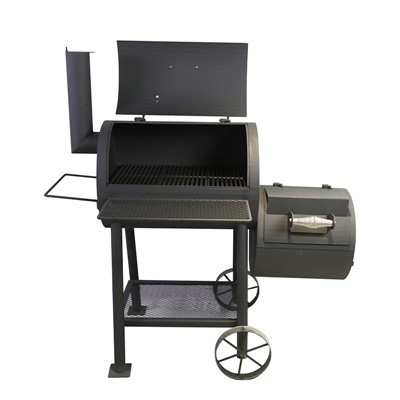
Carbon steel is widely used for fabricated outdoor cooking equipment because it can be cut, stamped, bent, formed, and welded using established metalworking processes. Its lower material cost can support products where structural fabrication and a defined corrosion-protection system are central to the design.
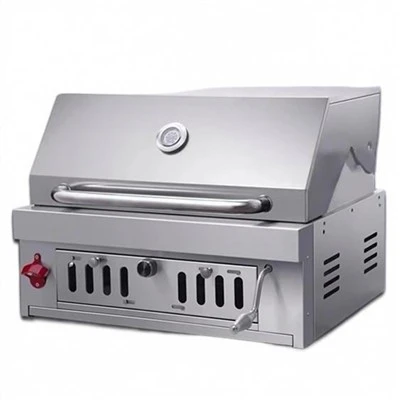
Stainless steel is available in multiple grades, with 304 stainless steel commonly considered for general outdoor equipment and 316/316L considered where corrosion exposure is more demanding. Grade selection should be evaluated together with thickness, surface finish, welding condition, fasteners, and the expected environment.
| Comparison Factor | Carbon Steel | Stainless Steel |
|---|---|---|
| Material Cost | Lower raw-material cost | Higher raw-material cost |
| Fabrication | Broad cutting, stamping, bending, forming, and welding capability | Cutting, forming, welding, and finishing for stainless-steel structures |
| Corrosion Resistance | Requires coating or other external corrosion protection | Chromium-containing surface provides inherent corrosion resistance |
| Surface Protection | Supports powder coating, painting, seasoning, and enamel finishes | Maintains corrosion protection without an exterior coating system |
| Scratch Resistance | Surface scratches can expose the underlying steel | Surface damage does not remove a separate coating layer |
| Outdoor Maintenance | Requires attention to coating condition, exposed steel, rust, grease, and ash | Simplifies exterior maintenance through its corrosion-resistant surface |
| Structural Application | Suitable for grill bodies, frames, charcoal trays, heat shields, and structural parts | Suitable for grill bodies, frames, trays, heat shields, and visible structural parts |
| Appearance | Flexible color and surface appearance through coating and finishing | Metallic appearance with brushed, polished, or other stainless finishes |
| Design Flexibility | Strong flexibility for formed sheet-metal grill structures | Combines structural fabrication with corrosion-resistant visible surfaces |
| Core Advantages | Lower material cost, broad fabrication options, flexible finishing, and easy integration into fabricated grill structures | Corrosion resistance, reduced dependence on exterior coatings, easier surface maintenance, and consistent metallic appearance |
Heat transfer should not be judged from steel grade alone. Material thickness, grill geometry, airflow, charcoal distribution, ventilation openings, cooking grate design, and heat shields can all affect temperature distribution and thermal cycling.
Performance in BBQ Applications
The charcoal tray and heat shields can receive direct radiant and convective heat, while the outer body and frame experience repeated heating and cooling. Localized hot spots can cause thermal expansion or distortion when thickness, geometry, support points, and ventilation are not properly designed.
Carbon steel can be used for grill bodies, charcoal trays, frames, and other fabricated components when the surface-protection system is incorporated into the product design. Scratches or damaged coating areas can expose the underlying steel to moisture, making coating inspection and maintenance relevant to outdoor use.
Stainless steel can develop heat tint or discoloration around heavily heated or welded areas. This does not by itself indicate structural failure, but visible surfaces may require defined welding, grinding, and finishing procedures. Cooking grates should also be assessed separately because food-contact surfaces have specific material, cleaning, and surface-condition requirements.
Manufacturing and Wholesale Cost
The material price on a quotation is only one part of the manufacturing cost. Buyers should consider cutting, forming, stamping, bending, welding, grinding, surface treatment, assembly, inspection, packaging, production yield, and material thickness when comparing suppliers.Carbon steel may require additional surface-treatment operations, depending on the product design:
- Surface preparation and pretreatment
- Painting or powder coating
- Enameling or seasoning where applicable
- Curing, drying, and surface inspection
- Control of scratches, exposed substrate, and coating defects
Stainless steel can reduce dependence on exterior coatings, but welding and finishing can increase fabrication requirements. For visible stainless surfaces, grinding, polishing, weld treatment, and finish consistency can affect production cost. For OEM/ODM projects, material selection should therefore be finalized together with grill dimensions, ventilation, charcoal tray design, handles, wheels, doors, surface appearance, logo treatment, and packaging.
Quality Control Points for Importers
Importers should verify the material grade and thickness against the approved purchasing specification rather than relying on visual identification. Where required, material documentation should correspond with the specified grade and product structure.
Inspection should cover both material-specific and general fabrication requirements:
- Cutting, forming, stamping, and dimensional accuracy
- Weld condition and component alignment
- Coating or surface-treatment condition for carbon steel
- Surface contamination, weld discoloration, and finish consistency for stainless steel
- Lid alignment and operation
- Cooking grate and charcoal tray installation
- Air-vent operation
- Wheel and handle assembly
- Packaging and finished-product condition
A qualified supplier should be able to explain the production sequence from material preparation through assembly and final inspection. This process-based assessment gives buyers more useful information about manufacturing capability than product photographs or a general material description.
Material Selection by Application
The appropriate material depends on the operating environment, product positioning, component function, and maintenance conditions. An outdoor grill exposed to humidity or salt spray has different corrosion-control requirements from a product stored under cover and used intermittently.
| Application | Key Considerations |
|---|---|
| Entry-level outdoor products | Material cost, fabrication, corrosion protection |
| Premium outdoor equipment | Grade, surface finish, structure, appearance |
| Coastal or salt-exposed areas | Stainless grade, coating protection, fasteners, drainage |
| Commercial catering | Cleaning frequency, thermal cycling, grate construction |
| Long-term outdoor storage | Moisture retention, drainage, surface protection |
| Appearance-focused products | Finish consistency, visible weld treatment, coating condition |
For humid or coastal applications, buyers should evaluate the complete corrosion-control system. Fasteners, hinges, vents, welds, joints, coatings, and water-retention points can influence product behavior even when the main body uses a corrosion-resistant material.
For commercial use, repeated cleaning and thermal cycling may have greater importance than appearance alone. Component thickness, grate construction, charcoal-tray design, weld quality, surface treatment, and replacement requirements should therefore form part of the purchasing specification.
Other Material Options
Other materials can be used for specific Charcoal BBQ Grill components when their properties match the required thermal, mechanical, corrosion, and weight conditions. The selection should be based on the function of each component rather than treating these materials as direct replacements for carbon steel or stainless steel.
- Corten steel: May be considered for selected outdoor structures where its weathered surface development, drainage requirements, appearance, and installation environment are compatible.
- Cast iron: Commonly used for cooking grates because of its thermal mass and heat-retention characteristics; its higher weight, corrosion tendency, maintenance requirements, and response to severe thermal shock should be considered.
- Aluminum: Suitable for selected components where low weight is important; local temperature, mechanical loading, structural requirements, and heat exposure should be evaluated before use.
For Charcoal BBQ Grills using multiple materials, Huzhou Blue Carp Co., Ltd. supports metal fabrication, welding, surface treatment, assembly, and quality inspection. For OEM/ODM projects, buyers can define material and component requirements during development and align them with the required manufacturing and inspection processes.
Blue Carp Provides Charcoal BBQ Grill Solutions
Huzhou Blue Carp Co., Ltd. provides Charcoal BBQ Grill solutions for buyers developing or sourcing products with different material, structural, and outdoor-use requirements. Its manufacturing capabilities cover product development, metal fabrication, cutting and forming, welding, surface treatment, component processing, assembly, quality inspection, bulk production, and OEM/ODM.
For carbon steel and stainless steel grill projects, Blue Carp can coordinate material selection, product structure, surface treatment, and manufacturing processes according to the intended application. Its production process can include material preparation, cutting, stamping or bending, welding, surface treatment, component processing, and assembly, allowing material requirements to be connected with the finished grill structure.
Quality checks can cover dimensions, weld condition, lid alignment, cooking grate and charcoal tray installation, air-vent operation, wheel and handle assembly, surface finish, overall assembly, and packaging condition. For OEM/ODM projects, these requirements can be incorporated into the product specification before bulk production, providing buyers with a coordinated approach to material, fabrication, inspection, and finished-product requirements.