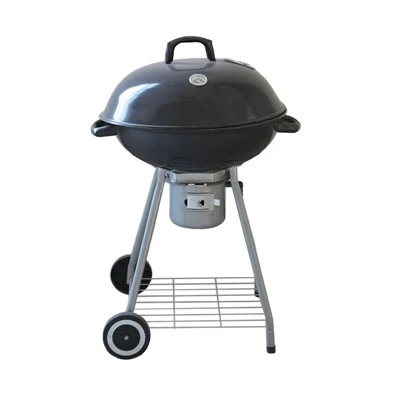
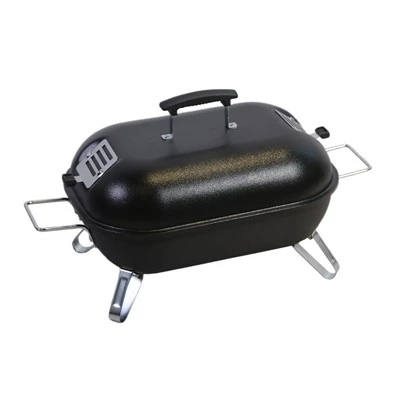
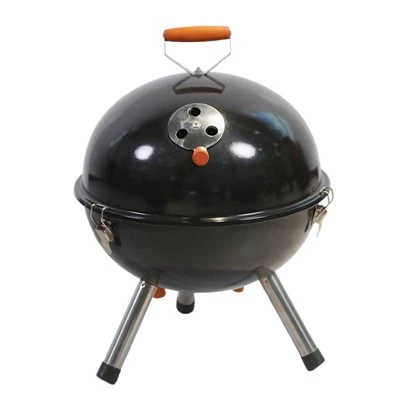
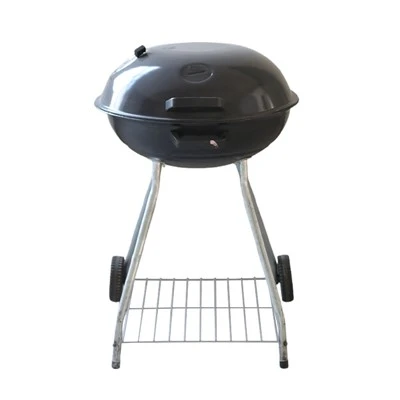
For importers sourcing a Charcoal BBQ Grill from China, the purchase decision should go beyond unit price and product appearance. A charcoal grill is a heat-producing metal assembly consisting of a grill body, cooking grate, charcoal tray or support, ventilation openings, ash collection components, handles, hinges, legs, wheels, and other structural parts depending on the model. Differences in material thickness, welding, surface treatment, airflow design, and packaging can affect how the product performs after it reaches the end user.
Pre-order checks are therefore important for wholesale buyers, distributors, retailers, outdoor living brands, and project suppliers. Before placing a bulk order, buyers should confirm the product specification, material and construction, functional safety, target-market compliance, quality inspection, packaging, and the manufacturer's ability to reproduce the approved sample consistently.
What Import Risks Should Buyers Consider When Importing Charcoal BBQ Grills from China?
The first step is to identify where differences between the quoted product and the delivered product could create problems.
For a Charcoal BBQ Grill, common procurement risks include differences in steel grade or thickness, inconsistent welding, inadequate surface treatment, unstable grate support, poor dimensional control, and damage during international transportation. These issues may not be obvious from product photographs or a basic quotation.
A buyer should therefore convert the product concept into measurable specifications before comparing suppliers. The specification should define, where applicable:
- Overall dimensions
- Cooking area
- Body material and thickness
- Cooking grate material
- Charcoal tray construction
- Ventilation structure
- Ash collection method
- Lid and hinge configuration
- Handle and support structure
- Surface treatment
- Product weight
- Accessories
- Packaging configuration
This also makes supplier quotations easier to compare. A lower quotation based on thinner material, fewer accessories, different packaging, or a different surface treatment is not directly comparable with a quotation based on the approved specification.
For private-label products, the same specification should be used from sample approval through bulk production. This creates a reference point for production inspection and reduces the risk of receiving a product that differs from the approved sample.
What Materials and Structures Should Importers Inspect?
Material and structural construction should be evaluated together because grills face repeated heating and cooling and outdoor exposure. Common materials include stainless steel, mild steel, cast iron, and Corten steel, with selection depending on design, operating environment, appearance, and target cost. Buyers should require the supplier to specify the material used for each major component rather than relying on general descriptions such as"steel construction."
Important inspection points include:
- Steel or stainless steel grade
- Material thickness
- Cooking grate material
- Charcoal tray material
- High-temperature component construction
- Surface treatment
- Corrosion protection
- Welding quality
- Edge finishing
- Structural joints
Buyers should verify material thickness against the approved specification, particularly for the grill body and load-bearing parts, and check that the cooking grate is stable and securely connected. Welds should be inspected for incomplete joints, cracks, excessive spatter, sharp edges, and uneven grinding, while ventilation components should be checked for proper location, opening size, adjustment, and accessibility to ensure controlled combustion airflow.
What Functional and Safety Checks Should Be Completed Before Shipment?
Buyers should evaluate the grill as a complete operating product, checking controllable airflow, secure and removable ash collection, overall stability, and the support and load capacity of the cooking grate. Legs, frames, wheels, shelves, handles, and lid grips should be securely fitted and assessed for stability and exposure to high temperatures during use.
A pre-shipment inspection can therefore include:
| Inspection Area | What to Check |
|---|---|
| Ventilation | Vent opening, adjustment and airflow structure |
| Charcoal system | Charcoal tray/support and positioning |
| Ash removal | Fit, removal and cleaning |
| Cooking grate | Position, support and load-bearing performance |
| Stability | Legs, frame, wheels and overall balance |
| Lid | Opening, closing, hinge alignment and handle |
| High-temperature areas | User access and heat exposure |
| Assembly | Fasteners, joints and component fit |
| Surface | Sharp edges, scratches and visible defects |
What Compliance Requirements Should Importers Check?
Compliance requirements should be determined by the destination market and specific grill configuration. Buyers should verify applicable product, material, food-contact, safety, labeling, and documentation requirements, checking test reports for the actual material, configuration, and test scope rather than relying on generic certificates or logos. For coatings and surface treatments, the coating type, substrate, temperature conditions, and intended use should also be confirmed, while European-market products should follow the conformity route and standards applicable to the specific design.
Importers should also check:
- Product identification
- Warning labels
- User instructions
- Assembly instructions
- Material documentation
- Applicable test reports
- Destination-market conformity requirements
- Packaging and labeling requirements
The key question is not simply whether the product has a particular certificate. The more useful question is: Which requirements apply to this exact product in the destination market, and what documentation demonstrates compliance? This approach is particularly important for private-label imports because changes to dimensions, materials, components, or product configuration may require the buyer to reassess the applicable documentation.
How Should Importers Check Packaging and Bulk Shipment Consistency?
Packaging and Shipment
A BBQ grill can pass factory inspection but still arrive damaged if the export packaging does not match its size, weight, structure, and transportation conditions. Before bulk production, buyers should confirm:
- Carton construction and dimensions
- Inner protective materials and product fixation
- Moisture protection where required
- Product and warning labels
- Pallet configuration where applicable
- Container loading arrangement
Packaging should protect vulnerable parts such as lids, handles, cooking grates, coated panels, and protruding components. For retail products, cartons may also need space for barcodes, product labels, assembly instructions, warnings, and brand artwork.
Bulk Consistency
Bulk consistency should be checked separately from packaging integrity. Importers should compare production units with the approved sample or specification for:
- Dimensions
- Material
- Product weight where specified
- Components and accessories
- Surface treatment
- Logo placement
Packaging configuration
This is particularly important for container-volume orders, as repeated minor deviations can become a significant quality issue across a large shipment.
How Should Buyers Evaluate a Charcoal BBQ Grill Manufacturer in China?
Supplier qualification should focus on whether the factory's capabilities match the product requirements. Buyers should verify metal fabrication, cutting and forming, welding, surface treatment, assembly, product development, sample production, quality inspection, packaging, and OEM/ODM customization. For OEM/ODM projects, the supplier should demonstrate its ability to work from drawings or samples and handle specified materials, dimensions, structural changes, branding, and packaging.
Production stability should also be assessed before mass production. Buyers should confirm MOQ, sample availability, sample and bulk lead times, customization scope, packaging options, inspection procedures, replacement-part arrangements, and specification-change communication. The approved sample and inspection requirements should serve as production references throughout the bulk order, providing a more practical basis for supplier comparison than product photos or unit price alone.
What Should Importers Confirm Before Placing a Bulk Order?
Before issuing a purchase order, importers can convert the above requirements into a pre-order checklist.
| Check Category | Information to Confirm |
|---|---|
| Product | Model, dimensions, cooking area and configuration |
| Material | Grade, thickness and component materials |
| Structure | Grill body, grate, charcoal tray, vents and support frame |
| Surface | Coating or other surface treatment |
| Function | Ventilation, ash removal, lid and grate operation |
| Safety | Stability, load-bearing and high-temperature areas |
| Compliance | Applicable destination-market requirements |
| Sample | Approved sample and reference specifications |
| QC | Inspection points and acceptance criteria |
| Packaging | Carton, inner protection and labeling |
| Quantity | MOQ and confirmed order quantity |
| Production | Sample and bulk production lead time |
| Customization | Logo, color, structure and packaging |
| Shipment | Loading arrangement and export packaging |
The most important point is to establish these requirements before the deposit and before mass production begins.
A quotation can tell an importer what the supplier intends to charge. It cannot, by itself, establish whether the material, structure, inspection method, packaging, and production requirements are aligned with the buyer's target market.
What Importers Should Confirm Before Ordering
Before placing a bulk order, importers should confirm the product specification, material and structure, functional safety, applicable market requirements, sample approval, bulk QC, packaging, and shipment conditions. For OEM or private-label projects, these requirements should also cover customization scope, production consistency, and packaging. The supplier should be evaluated against the specific product brief rather than catalog range alone.
Huzhou Blue Carp Co., Ltd. is a China-based outdoor product manufacturer covering charcoal BBQ grills, gas grills, electric grills, pellet grills, pizza ovens, griddles, fire pits, and outdoor heating products. Its relevant manufacturing capabilities include product development, metal fabrication, surface treatment, assembly, quality inspection, and OEM/ODM support, providing a basis for customized projects involving dimensions, structure, appearance, accessories, branding, and packaging.
For buyers, the practical evaluation should connect the product specification with sample development, production, quality inspection, packaging, and shipment requirements. Blue Carp's outdoor product manufacturing scope can support different residential, commercial, hospitality, and outdoor living requirements, while the suitability of a specific model should be confirmed through its actual material, structure, configuration, quantity, and destination-market requirements.