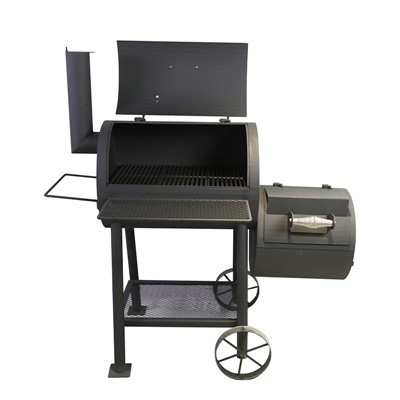
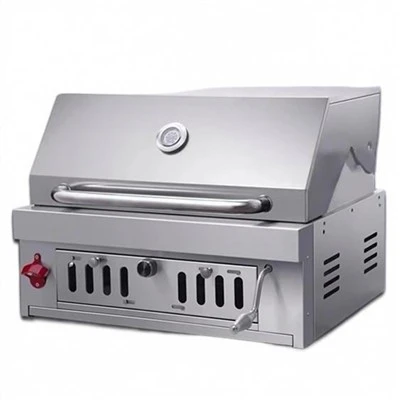
Importers can encounter problems when ordering charcoal BBQ grills if product specifications are discussed only in general terms. A quotation may state the product size and material while leaving details such as steel thickness, grate construction, ventilation, packaging dimensions, or assembly method undefined. These gaps can become difficult to correct after production has started.
For B2B purchasing, the specification should therefore cover the product itself as well as its production, packaging, logistics, and after-sales requirements. Confirming these details before sampling and mass production can help reduce the risk of returns, quality complaints, specification disputes, and delivery delays.
The objective is not simply to select a grill with a suitable cooking area. Buyers need to establish a complete specification that the manufacturer can use for production and quality inspection.
Core Product Construction Specifications
The construction specification should identify the materials, structural components, dimensions, and assembly condition of the grill. A description such as "steel charcoal grill" is usually insufficient because material grade, thickness, surface treatment, and structural design can vary between suppliers.
| Construction Item | What Buyers Should Confirm | Why It Matters |
|---|---|---|
| Body material | Carbon steel or stainless steel and applicable material grade | Establishes the basic material specification |
| Material thickness | Body, lid, charcoal chamber, and major structural parts | Affects product weight and structural construction |
| Surface treatment | Powder coating, enamel, or other specified finish | Defines the exterior finish and protection system |
| Grill grate | Material, dimensions, construction, coating | Directly affects the cooking surface specification |
| Frame | Legs, bracing, wheels, handles, side shelves | Defines support and mobility structure |
| Product weight | Net weight of the complete unit | Useful for handling and freight planning |
| Assembly | Fully assembled, partially assembled, or flat-packed | Affects packaging, assembly labor, and shipping |
The buyer should also distinguish between the primary cooking grate and warming rack when confirming dimensions. The stated cooking area should correspond to the intended measurement method so that quotations from different manufacturers can be compared on the same basis.
Performance & Functional Specifications
Performance requirements should be defined separately from physical construction. Cooking area, charcoal capacity, airflow, and ash management directly affect how the grill operates, while the required configuration depends on the intended cooking method and target users.
Important functional specifications include:
- Cooking area: Confirm the dimensions of the primary cooking grate and distinguish it from any warming rack.
- Charcoal capacity: Specify the required fuel-loading capacity and charcoal tray or basket configuration.
- Temperature control: Confirm the airflow adjustment method and the operating range required by the buyer.
- Ventilation: Define bottom intake vents, top exhaust vents, damper structure, and adjustment method.
- Ash collection: Specify ash pans, slide-out trays, or other collection systems and confirm that they do not obstruct airflow.
- Cooking configuration: Identify whether the design needs direct, indirect, or dual-zone cooking.
- Adjustable charcoal structure: Where required, confirm whether the charcoal tray can change its distance from the cooking grate.
For different grill sizes, buyers should evaluate the cooking area against the normal number of users, maximum cooking volume, desired cooking zones, and available outdoor space rather than relying on overall product dimensions alone.
Compliance & Safety Specifications
Compliance requirements should be identified before production rather than after the finished products are ready for shipment. The exact requirements depend on the destination market, product configuration, materials, labeling, packaging, and intended application.
Buyers should first establish which regional import standards and certification requirements apply to the product. The manufacturer should then know which requirements need to be incorporated into the design, materials, documentation, labeling, or packaging.
Heat resistance is another important consideration because the grill body, handles, vents, and other components are exposed to elevated temperatures. Buyers should identify the expected operating conditions and confirm the applicable material and surface-treatment requirements.
Corrosion protection should also be reviewed for outdoor products. The specification should identify the base material and surface treatment rather than relying on general descriptions such as "rust resistant." Where testing is required, the buyer should specify the relevant test method and acceptance criteria.
Physical safety should include details such as stable frame construction, suitable clearances, sharp-edge control, handle temperature considerations, and moving-part design. Wheels and locking mechanisms should also be checked where the product is designed to be moved.
Packaging requirements belong in this section as well as the logistics discussion. If the buyer requires drop, compression, vibration, or other packaging tests, the test method and acceptance criteria should be agreed before mass production.
Customization & Production Specifications
Customization should be converted into measurable production requirements rather than relying on general descriptions such as "custom charcoal BBQ grill." Buyers should confirm color, surface finish, logo position and marking method, packaging design, product dimensions, grate configuration, ventilation structure, handles, shelves, wheels, and charcoal-management components where applicable. Each customized requirement should be reflected in the approved drawing, sample, or specification sheet.
Commercial conditions should also be agreed before production, including MOQ, sample requirements, sample lead time, mass-production lead time, and the starting point for production lead time. Artwork, packaging, sample, and drawing approvals should be included in the production schedule where required. The purchase order should reference the approved specifications so that mass production can be checked against the agreed sample and documentation rather than product photographs alone.
Practical Logistics & After-Sale Specifications
A product specification should continue beyond the factory floor. For importers, the packed product is the unit that enters the logistics chain, so packaging dimensions and shipping weight are important purchasing data.
Buyers should confirm carton dimensions, net weight, gross weight, cartons per pallet where applicable, and container loading quantity. The relationship between product dimensions and packed dimensions can materially affect CBM and freight planning. A grill that fits the required product specification may still create a logistics problem if its packaging occupies excessive space.
Packaging structure should also be matched to the product. Heavy metal components, grates, lids, legs, wheels, and other parts may require internal protection to prevent movement, surface damage, or deformation during transportation. Buyers should confirm the agreed packaging configuration and any required packaging tests before shipment.
After-sales requirements should be defined before the order is placed. For products with replaceable components, the buyer can specify spare-parts provision, replacement components, defect handling procedures, and warranty terms. Components such as grates, handles, wheels, vents, or ash-collection parts may need to be identified by part number or specification.
The buyer should also establish how defects will be evaluated. Dimensions, welds, lid alignment, grate installation, vent operation, surface finish, assembly, and packaging can all be included in a pre-shipment inspection checklist.
Final Specification Checklist Before Ordering
Before placing a production order, buyers should consolidate the agreed requirements into a single specification sheet or approved product document.
| Category | Key Specifications to Confirm |
|---|---|
| Construction | Material grade, thickness, coating, grate, frame, product weight |
| Cooking | Cooking area, grate dimensions, charcoal capacity, cooking configuration |
| Temperature control | Intake vents, exhaust vents, dampers, airflow adjustment |
| Ash management | Ash pan, ash tray, removal method, cleaning access |
| Safety & compliance | Heat resistance, corrosion protection, structural safety, regional requirements |
| Customization | Color, logo, product configuration, packaging, labeling |
| Production | MOQ, sample lead time, mass-production lead time |
| Logistics | Carton dimensions, gross weight, CBM, container loading quantity |
| After-sales | Spare parts, defect handling, warranty terms |
The key point is to confirm these specifications before sampling and mass production, not after the goods have entered production. A complete specification gives the manufacturer a defined production target and gives the buyer measurable criteria for sample approval, inspection, packaging, and shipment.
For importers, the most useful specification is therefore not the longest specification sheet, but the one that clearly connects product construction, cooking performance, safety requirements, production conditions, and logistics data. This approach makes supplier quotations easier to compare and reduces the possibility that an undefined detail becomes a cost or delivery problem later in the order.
Blue Carp for Charcoal BBQ Grill Manufacturing
Huzhou Blue Carp Co., Ltd. manufactures outdoor cooking and living equipment for overseas B2B customers. Its product range includes charcoal, gas, electric, pellet, and ceramic grills, as well as pizza ovens, griddles, fire pits, and outdoor heating products.
Its manufacturing capabilities cover product development, metal fabrication, cutting and forming, welding, surface treatment, component processing, assembly, quality inspection, and bulk production. These processes are relevant when a buyer needs to coordinate product construction specifications with the manufacturing process rather than purchasing from a supplier based only on finished-product appearance.
For charcoal BBQ grill projects, inspection can cover dimensions, welds, lid alignment, grate and charcoal-tray installation, vent operation, wheels and handles, surface finish, assembly, and packaging. Huzhou Blue Carp Co., Ltd. also supports OEM/ODM requirements, which can be defined around product dimensions, materials, structure, grate configuration, ventilation, surface treatment, packaging, order quantity, and destination-market requirements.