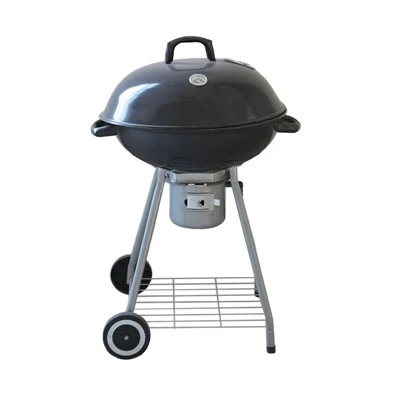
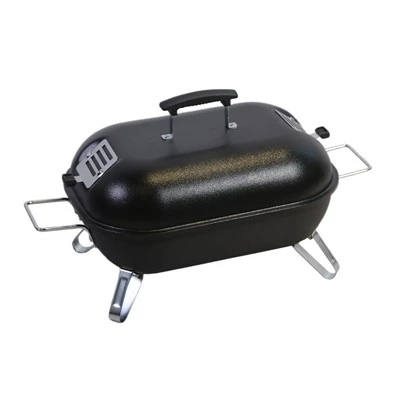
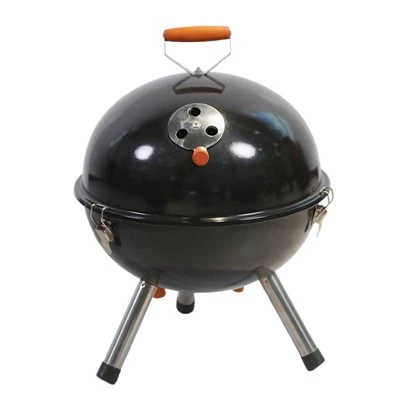
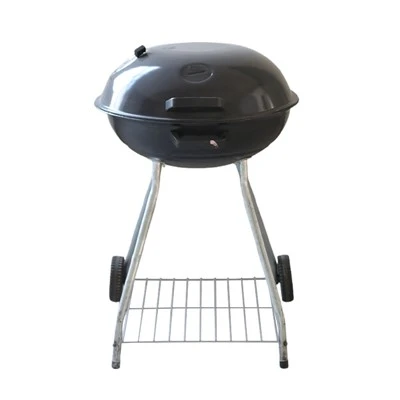
Heat retention and charcoal consumption are closely connected in a Charcoal BBQ Grill because the fuel must continuously replace heat lost from the cooking chamber. When heat escapes too quickly, more charcoal is required to maintain the target cooking temperature. This can increase fuel consumption, require more frequent fuel additions, and make temperature control less stable.
Improving charcoal efficiency is therefore not simply about reducing the amount of fuel loaded into the firebox. The performance of a Charcoal BBQ Grill depends on how its ventilation system, charcoal bed, cooking chamber, lid, charcoal tray, cooking grate, and body construction work together. For B2B buyers, these factors can be translated into specific product specifications and inspection requirements.
Heat Loss and Temperature Stability
Heat can escape from a Charcoal BBQ Grill through the body, lid, ventilation openings, cooking chamber, and other exposed surfaces. Thin body construction, poor lid contact, unnecessary opening of the cooking chamber, and strong external airflow can increase heat loss. When the internal temperature falls, the charcoal must generate additional heat to restore the target condition.
The basic relationship is:
Heat Loss → Temperature Drop → Additional Combustion → Higher Charcoal Consumption
This means adding more charcoal is not always the correct response to a falling temperature. If excessive heat is escaping through the lid, body, or open cooking chamber, additional fuel only compensates for the loss without addressing its source.
Operating practice also affects thermal stability. Keeping the lid closed when inspection is unnecessary, preheating the cooking chamber and grate, and using a thermometer instead of repeatedly opening the lid can reduce avoidable temperature fluctuations. Protecting the unit from strong wind can further reduce external heat loss.
Airflow, Combustion, and Maintenance
The amount of oxygen reaching the charcoal directly affects its combustion rate. In a Charcoal BBQ Grill, the bottom vent controls incoming air, while the upper vent provides the exhaust path. Adjusting these two openings changes the airflow through the cooking chamber and, consequently, the intensity of the fire.
The key is to maintain enough airflow for stable combustion without supplying more oxygen than the cooking condition requires. Excessive airflow can accelerate fuel consumption, while restricted airflow can leave sufficient charcoal unable to produce the required heat.
A falling cooking temperature does not necessarily indicate that more charcoal is needed. Before adding fuel, the operator should check whether the charcoal is still receiving adequate oxygen and whether ash has accumulated beneath the fuel bed.
This distinction is important because adding charcoal to a restricted combustion area may increase the amount of fuel without solving the airflow problem. Airflow condition should therefore be checked before fuel replenishment when temperature drops unexpectedly.
Ash gradually accumulates beneath and around the charcoal during combustion. If the layer becomes excessive, it can reduce the open space beneath the charcoal grate and interfere with oxygen reaching the fuel bed. The result can be slower combustion and less predictable temperature control.
Regular maintenance should therefore include ash removal, charcoal-grate inspection, and vent inspection. Keeping these areas clear helps maintain the designed airflow path. Usable partially burned charcoal can also be separated and retained for a later cooking cycle when appropriate.
Fuel Arrangement, Charcoal Type, and Controlled Heat Output
The way charcoal is positioned affects where heat is generated, how it moves through the cooking chamber, and how long the fuel bed can maintain the required temperature. The main arrangements can be selected according to the cooking task:
- Two-zone fire: Charcoal is concentrated on one side, leaving another area without direct fuel underneath. This creates separate direct and indirect cooking zones and allows food to be moved between higher and lower heat areas.
- Progressive-burning layout: Methods such as the snake or Minion method allow charcoal to ignite gradually. This is useful when the cooking process requires a longer and more controlled heat output rather than rapid combustion of the entire fuel bed.
- Charcoal basket: A basket keeps the fuel within a defined combustion area, helping control the position of the heat source and reducing unnecessary dispersion of charcoal across the firebox.
Fuel type should also match the required cooking condition:
- Lump charcoal: Can produce rapid heat and is suitable for cooking conditions requiring higher temperatures and faster heat response.
- Charcoal briquettes: Can provide a more controlled and extended burn, making them suitable for longer cooking periods where stable heat output is required.
- Fuel combination and arrangement: The objective is not simply to reduce the amount of charcoal. Fuel type, quantity, arrangement, and combustion rate should correspond to the target cooking temperature and duration.
Fuel replenishment should be based on the actual condition of the fire rather than a fixed schedule. When the existing fuel is approaching the end of its useful burning period and the cooking temperature begins to decline, additional charcoal may be required. Smaller fuel additions generally provide more controlled replenishment than adding a large quantity of unlit charcoal at once. When appropriate, a chimney starter can be used to pre-light additional charcoal before it is transferred to the main fuel bed.
Thermal Mass and Grill Construction
Thermal mass and insulation serve different functions in a Charcoal BBQ Grill. Thermal mass absorbs and stores heat, then releases part of that stored energy as the surrounding temperature changes. Insulation reduces the rate of heat transfer from the hot cooking chamber toward the cooler exterior.
Refractory fire bricks are one example of an additional thermal-mass solution for suitable grill configurations. They can be positioned around parts of the cooking chamber to increase heat storage and reduce short-term temperature fluctuations. However, their placement must leave sufficient space for combustion airflow and must not interfere with the charcoal grate or cooking grate.
The construction of the grill also affects heat retention and distribution. Body construction influences heat transfer through the chamber walls. Lid fit affects hot-air leakage. Chamber geometry influences heat circulation, while the charcoal tray determines the position and containment of the fuel bed. The cooking grate, vent structure, and distance between the fuel bed and cooking surface also influence how heat reaches the food.
These components should therefore be evaluated as an integrated thermal system. A heavier body alone does not guarantee lower fuel consumption if the lid leaks heat or the ventilation system allows uncontrolled combustion.
How to Evaluate Heat Retention and Charcoal Efficiency
A practical evaluation of a Charcoal BBQ Grill requires defined operating conditions. A claim that a unit "uses less charcoal" is not sufficient for technical purchasing because fuel consumption depends on cooking temperature, cooking duration, fuel type, ambient conditions, and operating method.
| Evaluation Factor | What to Check |
|---|---|
| Charcoal consumption | Fuel used during a defined cooking period |
| Temperature stability | Temperature fluctuation during operation |
| Heat retention | Temperature decline after reaching the target condition |
| Recovery time | Time required to regain target temperature |
| Heat distribution | Temperature difference between cooking zones |
| Combustion control | Response to ventilation adjustment |
| Usable heat duration | Time maintained within the required temperature range |
For B2B purchasing, these factors can be converted into measurable requirements for body material and construction, lid fit, ventilation configuration, charcoal tray design, cooking grate structure, chamber dimensions, fuel capacity, target temperature, and operating duration.
For OEM/ODM projects, buyers can further specify the fuel arrangement, cooking zones, ventilation system, material, dimensions, surface treatment, packaging, and destination-market requirements. This provides the manufacturer with a defined production specification and gives the buyer more objective criteria for evaluating the finished product.
Blue Carp: Manufacturing Capabilities for Charcoal Grill Projects
Huzhou Blue Carp Co., Ltd. manufactures outdoor cooking and outdoor living equipment for overseas B2B buyers, including distributors, retailers, importers, brands, and project purchasers. Its product range includes Charcoal Grills, Gas Grills, Electric Grills, Pellet Grills, Ceramic Grills, Pizza Ovens, Griddles, Fire Pits, Outdoor Heating Products, and BBQ Accessories. For Charcoal BBQ Grill projects, its manufacturing capabilities cover product development, metal fabrication, cutting and forming, welding, surface treatment, component processing, assembly, and quality inspection, supporting components such as grill bodies, cooking chambers, charcoal trays, ventilation parts, cooking grates, lids, handles, and wheels.
Quality control can cover overall dimensions, welds, lid alignment, grate and charcoal-tray installation, ventilation operation, surface finish, final assembly, and packaging. For OEM/ODM projects, these capabilities can be applied to defined requirements for dimensions, structure, body material, grate and ventilation configuration, charcoal tray, lid, surface treatment, color, logo, packaging, labels, manuals, barcodes, MOQ, and destination-market requirements.